

A team member brings you a customer complaint. You’re busy, you know how to handle it, and you want to make sure the customer is taken care of. So you say, “I’ll take care of it.”
The next time a complaint comes in, that same team member brings it to you again.
Eventually, you find yourself wondering, Why does everything come back to me? Why doesn’t my team take more initiative?
In my 8th book, The Fully Powered™ Leader, I describe a manager who regularly questions or reverses decisions employees make on their own. Over time, the team learns to wait for approval. The manager sees their hesitation as proof that they need more oversight, and the cycle continues.
That’s the domino effect of a Power Leak™. A leader’s response to uncertainty can become the way an entire team learns to work. And when that response changes, the ripple can work in your favor.
The Control Loop™ can start with caring about the outcome
I worked with a decluttering business owner named Robyn who knew she needed to delegate. Her business was growing, and she wanted more time for her family and her health. She understood the business case for getting help. Then came the questions that made it hard to follow through. What if someone makes a mistake? What if the work doesn’t meet my standards? What if it’s easier to do it myself?
We got curious about what made handing over responsibility feel so uncomfortable and where she noticed that tension in her body. Then we paired that awareness with practical steps. Robyn hired a social media manager and eventually brought on additional cleaning staff. Each step gave her a chance to practice sharing responsibility while someone else had a chance to contribute.
You might notice the same impulse in a routine meeting. Your jaw tightens when someone suggests an approach you hadn’t considered. You start rewriting their plan before they’ve finished explaining it. That’s a moment to pause and ask yourself, What does this situation actually need from me right now?
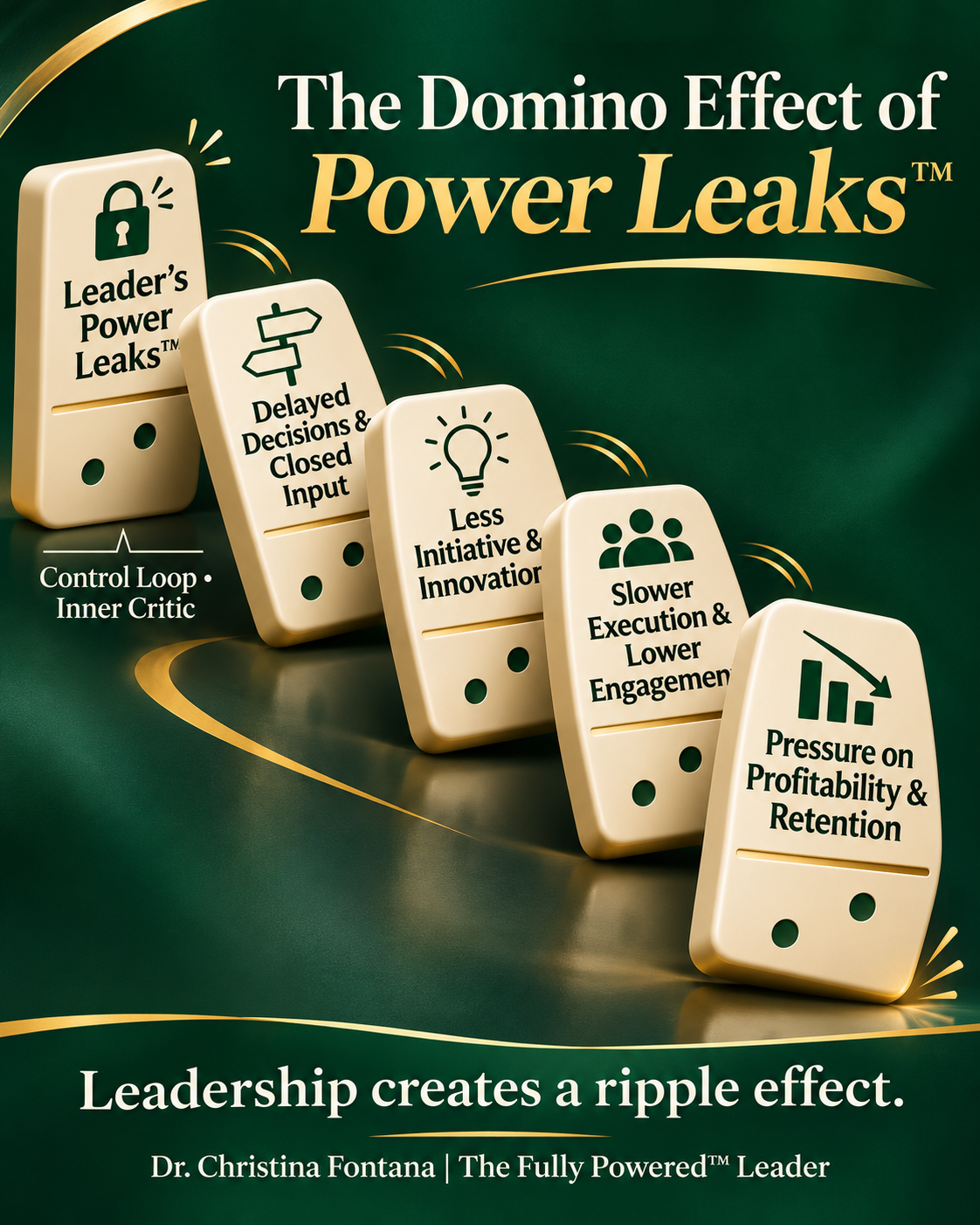
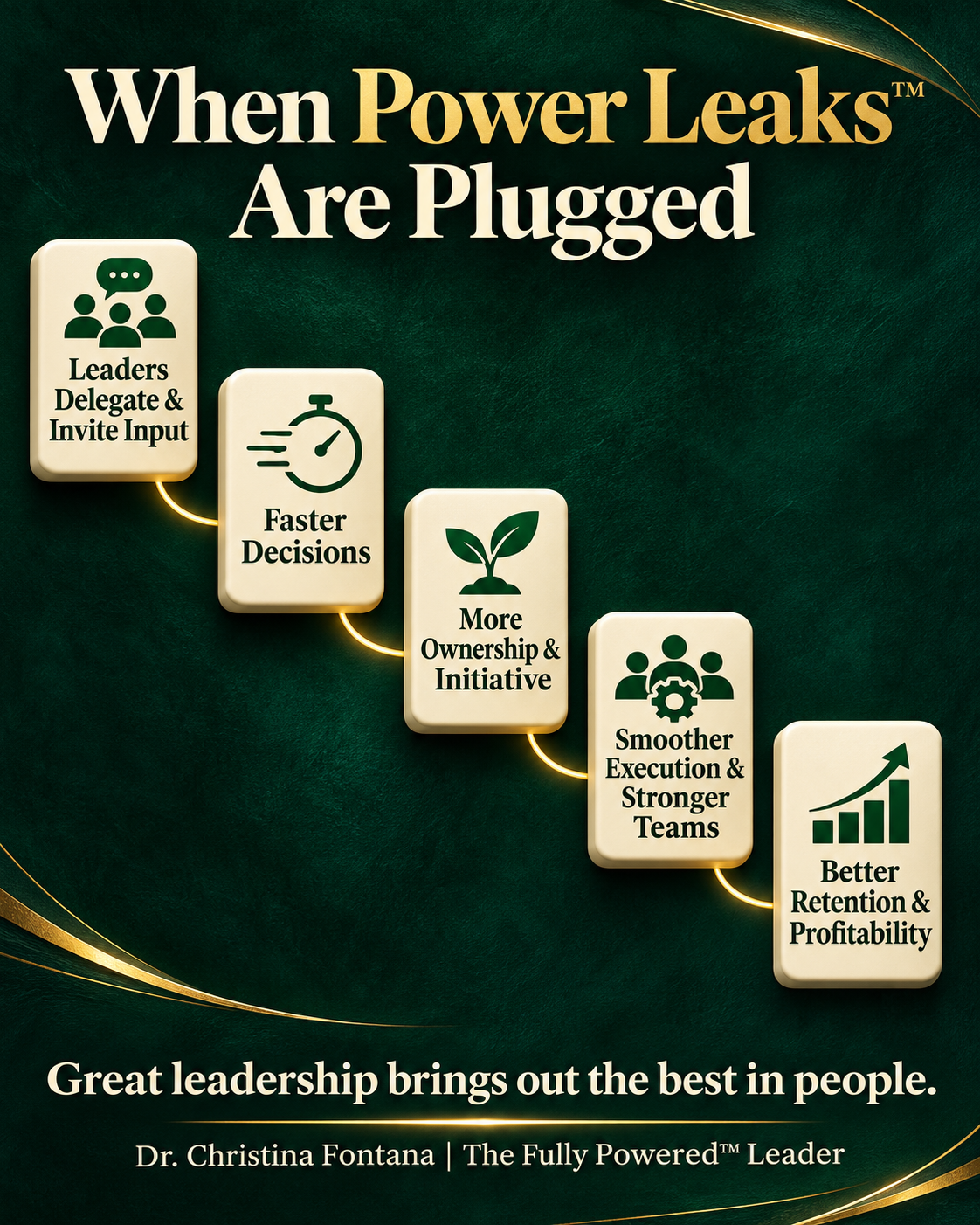
What changes when leaders give people room to lead
Go back to the customer complaint. This time, imagine asking, “How would you handle it?” Give the person time to answer. Then clarify which decisions they can make on their own, when to bring you in, and how you’ll follow up.
The next time a similar complaint comes up, they have a clearer path to resolve it. The customer spends less time waiting. You get fewer interruptions. And your team member gets something that matters for their development: a chance to exercise their judgment and see the result.
That’s how the positive domino effect begins. When leaders delegate decisions and invite input, teams can move faster, take more ownership, and bring forward ideas that improve how the work gets done. Over time, smoother execution and a team that feels trusted to contribute can support stronger retention and business performance.
Inviting input is part of that shift, too. If you ask your team where a process breaks down, pay attention to how you respond when their answer implicates one of your own decisions. Your response helps determine whether they’ll speak up the next time they see a problem coming.
Start with one decision that keeps landing on your desk
Choose a recurring decision that someone on your team could handle with clear expectations and support. Then have a short conversation about three things.
- What they own. Name the decision and what a good outcome looks like.
- When to bring you in. Agree on the boundaries and exceptions up front.
- What you’ll learn together. Set a check-in to hear what worked, where they got stuck, and what would make the process smoother next time.
Once you’ve handed over the decision, give them room to make it. They may get to a good outcome in a way you wouldn’t have thought of. That’s one of the rewards of developing leaders around you.
Great leadership creates the conditions to bring out the best in people. Sometimes that starts with one less decision waiting for your approval.
Adapted from Chapters 1 and 9 of The Fully Powered™ Leader, drawing on Robyn’s story and the book’s example of how repeated oversight can shape a team’s willingness to take initiative.
Fully Powered™ Leadership Begins With the Conditions We Create.
Dr. Christina Fontana helps organizations uncover the hidden patterns that compromise leadership effectiveness, psychological safety, and workplace performance. By integrating nervous system awareness, behavioral transformation, and the Fully Powered™ Leadership Framework, she helps leaders reclaim their power and unlock the brilliance, contribution, and potential of the people they already have.
Ready to Build a Fully Powered™ Organization?
Your people already have incredible potential. The question is: Are your leadership practices and workplace culture helping them thrive—or holding them back?
Through the Fully Powered™ Leadership Framework, I help organizations identify hidden Power Leaks™, strengthen psychological safety, and create the conditions where leaders and teams feel engaged, energized, and empowered to perform at their best.
Let’s explore what’s possible for your leaders, your people, and your organization.
📩 Email me: [email protected]
💬 Or send me a direct message on LinkedIn to start the conversation.
Because when leaders become Fully Powered™, people thrive—and organizations achieve stronger results.
Dr. Christina Fontana | Leadership Expert | Creator of the Fully Powered™ Leadership Framework