
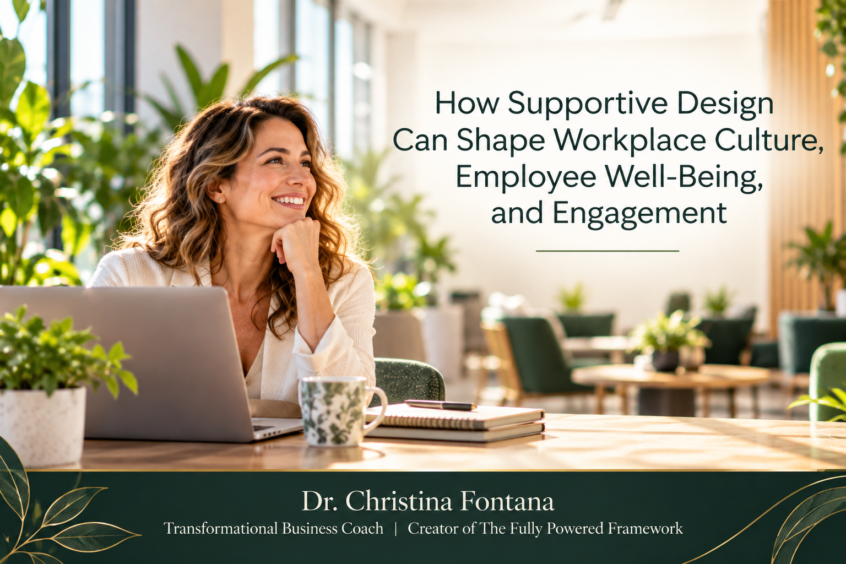
How Supportive Design Can Shape Workplace Culture, Employee Well-Being, and Engagement
When we talk about workplace culture, we often talk about leadership, communication, employee engagement, benefits, and company values.
But there is another piece of the conversation that deserves more attention: supportive design.
Supportive design looks at how the environment around us can support our well-being and reduce unnecessary stress.
And in the workplace, that matters.
Your workplace is communicating with your employees long before a leader says a word.
The lighting matters. The noise matters. The furniture matters. The amount of privacy matters. The ability to connect with other people matters. Even whether someone has a place to step away, take a breath, and reset matters.
All of these factors contribute to the experience your employees have at work.
And that experience becomes part of your culture.
Your Physical Environment Is Part of Your Culture
Think about the message an environment can send.
Does your workplace have natural light?
Are there plants, greenery, or natural elements?
Can employees choose between spaces designed for collaboration and spaces where they can concentrate?
Are there areas where someone can take a break or have a moment of quiet?
Is the furniture comfortable and ergonomic?
Is the space accessible to employees with different physical needs?
Can employees personalize their workspace and make it feel like their own?
These are some of the questions I encourage organizations to consider when assessing supportive design.
There are also opportunities to intentionally create connection. Something as simple as an inviting communal area, coffee station, or shared space can give employees opportunities to interact and build relationships.
These details may seem small, but culture is built through small experiences repeated over time.
Supportive Design Is About More Than the Office
This is where the conversation gets especially interesting.
I believe we can take the principles behind supportive design and look beyond the physical environment to consider the overall employee experience.
Does the culture encourage employees to take regular breaks?
Do people feel comfortable communicating when they’re struggling?
Do employees feel heard and supported by management?
Do leaders actually model the well-being behaviors they encourage employees to practice?
These are all practices I encourage organizations to consider when creating a more stress-reducing culture.
You can create a beautiful relaxation room, but if employees are afraid they’ll be judged for using it, have you really created a supportive environment?
You can tell people to take breaks, but if their workload makes taking a break nearly impossible, what message does the culture actually send?
You can talk about work-life balance, but if employees are expected to be available at all hours, what are they actually experiencing?
The design of the workplace and the behaviors within that workplace have to support one another.
Supportive Design Can Support the Nervous System
This is also why I believe supportive design belongs in the conversation about nervous system health at work.
Our nervous systems are continually receiving information from our environments.
Noise, interruptions, lack of privacy, uncomfortable surroundings, constant urgency, unclear communication, and a lack of control can all contribute to the stress people experience during the workday.
Organizations can also intentionally create opportunities for employees to reset.
This could include dedicated spaces for rest or mindfulness, access to wellness resources, breathing exercises, Employee Assistance Programs, or education around mindfulness and nervous system regulation.
The goal isn’t to eliminate stress from work. That’s unrealistic.
The opportunity is to stop creating unnecessary stress where we have the ability to design something differently.
Flexibility Is Also a Form of Support
Supportive workplace practices can extend beyond a physical building.
For some organizations, providing remote or hybrid options can reduce commuting stress. Flexible hours can also allow employees to work in ways that better accommodate personal needs and individual energy cycles.
That doesn’t mean every organization needs the same policies.
It means leaders can become more curious about the relationship between the structure of work and the people doing it.
Instead of only asking, “How do we get our employees to adapt?”
We can also ask, “Where can the workplace adapt to better support our employees?”
Connection Is Part of the Design
A supportive workplace isn’t only about reducing stress. It’s also about intentionally creating opportunities for human connection.
That can happen through regular team check-ins, spaces for informal conversations, collaboration, team-building experiences, or simply giving people opportunities to acknowledge and appreciate one another.
This is important because culture isn’t something that exists independently of people.
Culture is created through people’s experiences with one another.
The question becomes whether we’re leaving those experiences to chance or intentionally creating opportunities for connection, support, recognition, and belonging.
Take a Look Around Your Workplace
If you’re a leader, business owner, or HR professional, I want to challenge you to look at your workplace with fresh eyes.
Where can employees concentrate?
Where can they connect?
Where can they reset?
Does the environment give people some sense of choice?
Then look beyond the physical space.
Do employees feel heard?
Are they recognized for their contributions?
Do they have opportunities to connect with one another?
Are your policies and practices actually supporting their well-being?
Your workplace is already designed.
The question is whether it is designed to support the people inside it.
And you don’t have to completely redesign your workplace to start making a difference.
Small, intentional changes can create opportunities for greater connection, engagement, well-being, and support.
Ready to Take a Closer Look at Your Workplace?
I created my Engage to Excel workbook to help leaders move from thinking about employee engagement to identifying practical ways to improve it.
Inside, you’ll find more than 40 simple ideas for engaging employees, strategies for supporting the nervous system and creating a more stress-reducing culture, a Supportive Design Checklist you can use to evaluate your workplace, and questions to help you identify opportunities for greater engagement and business impact.
The Supportive Design Checklist will help you look at areas you may not have considered, including natural light, ergonomics, greenery, spaces for focused work and relaxation, flexible seating, opportunities for connection, air quality, accessibility, and workspace personalization.
Because creating a thriving workplace culture doesn’t always begin with a massive initiative.
Sometimes it begins by noticing what your people experience every day and asking:
What could we do differently to help our people thrive?
Download your free Engage to Excel workbook here
Hi, I’m Dr. Christina Fontana 👋Creator of The Fully Powered Framework.
I solve expensive problems.💰
The kind that cost organizations and leaders time, energy, talent, productivity, and profit.
Through these Fully Powered Framework Clips, I share powerful perspectives on leadership, burnout, workplace culture, mindset, healing, performance, and what it takes to become Fully Powered™ — personally and professionally.
My work helps leaders and organizations identify the Power Leaks™ that are quietly costing them and create meaningful, sustainable transformation.
🎤 SPEAKING • TRAINING • CONSULTING • COACHING
Looking for a speaker, trainer, or expert for your organization, conference, leadership team, or event?
Let’s talk.
📩 [email protected]
🌐 www.pharmacistcoach.com
www.youtube.com/christinatarantola1
Subscribe for more Thought Leader Clips designed to challenge how you think, lead, work, and live.
#ThoughtLeadership #Leadership #WorkplaceCulture #Burnout #FullyPowered